By the Numbers: How LA's Homelessness Crisis Looks in Downtown's Skid Row
New data reveals the scale of Los Angeles's most concentrated poverty zone, where 4,200 individuals sleep rough within a 50-block radius.
New data reveals the scale of Los Angeles's most concentrated poverty zone, where 4,200 individuals sleep rough within a 50-block radius.
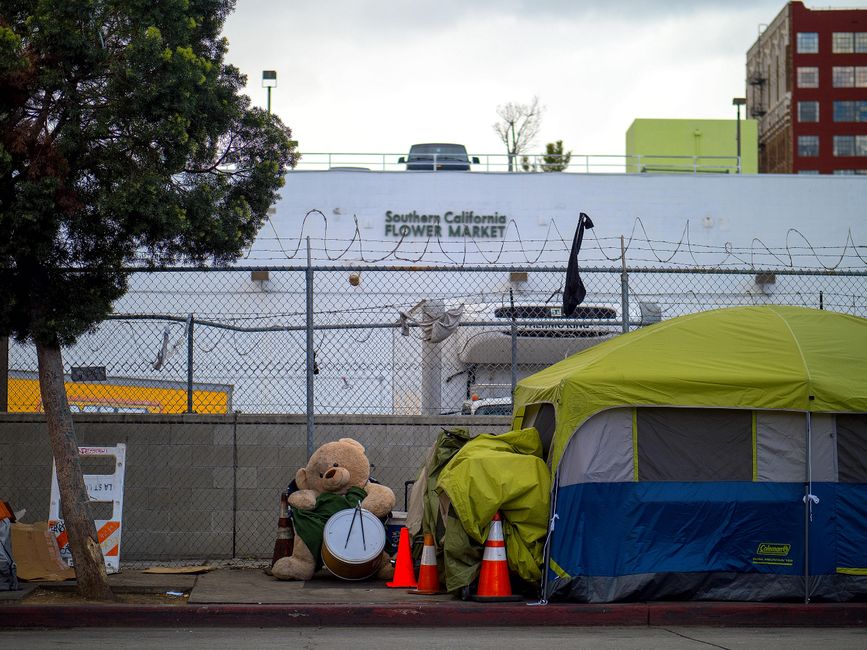
The numbers tell a story that walking down San Pedro Street or 5th Avenue cannot fully capture. According to the latest Greater Los Angeles Homeless Count released this spring, Downtown Los Angeles's Skid Row district—roughly bounded by 3rd Street, 7th Street, Main Street, and Alameda Street—contains approximately 4,200 individuals experiencing homelessness. That's roughly 8% of LA County's total homeless population of 52,000, concentrated in an area measuring just 1.5 square miles.
The density is staggering: in some blocks, outreach workers encounter 40 to 50 unhoused individuals per city block. By comparison, Santa Monica, another epicenter of LA's homelessness crisis, spreads its 1,200 unhoused residents across 8.3 square miles. The difference illustrates why Skid Row—home to major shelters like the Union Rescue Mission on skid row and the Los Angeles Mission on 5th Street—has become both a critical service hub and a visible symbol of the region's housing crisis.
The economics are equally sobering. Average rent in Downtown LA has climbed to $2,100 monthly for a one-bedroom apartment, up 34% since 2020. Meanwhile, minimum wage in California sits at $16.50 per hour—meaning a full-time worker earns roughly $2,860 monthly before taxes. Housing cost burden, typically defined as spending more than 30% of income on rent, affects 68% of Downtown LA renters earning below the area median income of $48,000 annually.
Service providers working in the district face corresponding pressures. The Los Angeles Homeless Services Authority reports operating 1,847 emergency shelter beds across the county, yet nearly 900 individuals in Skid Row alone cycle through unsheltered nights, according to street-level counts conducted by PATH (People Assisting the Homeless) and the Community Coalition.
Mental health and substance use disorders compound the crisis. Data from the LA County Department of Health shows 72% of individuals surveyed in Skid Row report struggling with these conditions, compared to 58% countywide. Yet only 11% of Skid Row residents report accessing mental health treatment in the past month, reflecting chronic gaps in integrated care.
The financial commitment required to address these numbers is substantial. Permanent supportive housing costs approximately $35,000 per person annually in Los Angeles—roughly what it costs to provide temporary emergency shelter at $21,000 yearly. Yet the long-term savings are real: housed individuals with support show 50% fewer emergency room visits and 60% fewer jail nights, according to a recent UCLA study examining Skid Row interventions. The data suggests that ending homelessness here requires not just compassion, but serious investment in the numbers that currently define Downtown LA's most vulnerable neighborhoods.
This article was compiled by AI from the sources linked above and screened before publishing. See our editorial standards.
How does this story make you feel?
Spread the word
About this article
Published by The Daily Los Angeles
Daily brief
Free, in your inbox before 7am. Weekdays.
More in News