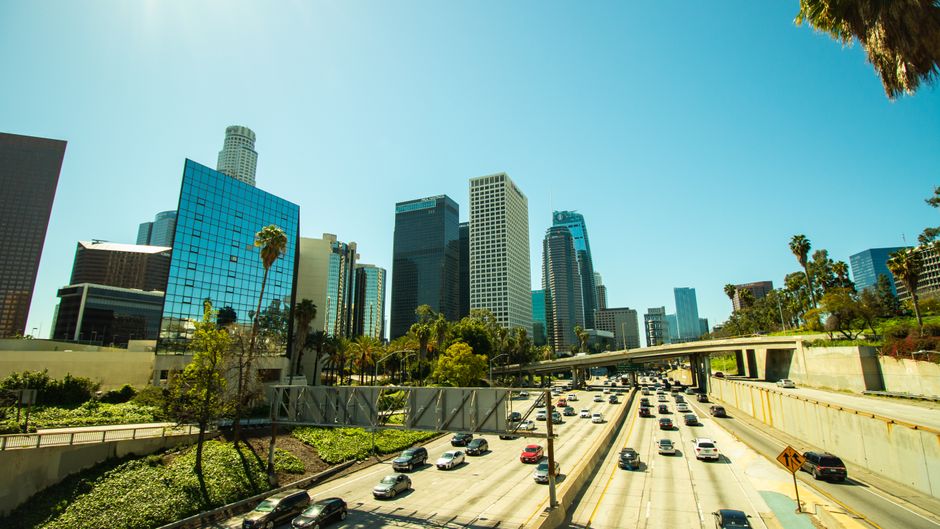
From Smog Emergencies to Green Ambitions: How Los Angeles Built Its Path to Sustainability
Decades of environmental crises forced the city to reimagine itself—and today's ambitious climate goals are rooted in that hard-won history.
Decades of environmental crises forced the city to reimagine itself—and today's ambitious climate goals are rooted in that hard-won history.
When the South Coast Air Quality Management District first began tracking air pollution in the 1960s, Los Angeles residents couldn't see across downtown on bad days. The San Gabriel Mountains, visible from Grand Central Market on a clear morning, would vanish entirely beneath ochre haze. That wasn't poetic exaggeration—it was survival. Children playing in Griffith Park during summer smog alerts were advised to stay indoors. Asthma rates in neighborhoods like Long Beach and Vernon soared to alarming levels.
That dystopian baseline is crucial to understanding why Los Angeles has become a laboratory for environmental ambition. The city didn't choose sustainability idealism; it chose it because the alternative—continuing on the trajectory of the 1970s and 80s—was literally killing residents.
The turning point came incrementally. The 1970 Clean Air Act set federal standards that California's regulators pushed harder than anyone else. By the 1990s, the SCAQMD had forced automakers to develop catalytic converters and eventually electric vehicles. Tesla's Fremont factory, just outside the region, became a symbol of what was possible when regulation met innovation. Air quality metrics showed undeniable improvement by the 2000s, though the region still ranked among America's worst.
That progress—fragile and incomplete—created momentum. The Port of Los Angeles, historically one of the nation's most polluting harbors, began transitioning its massive fleet to cleaner fuels. The city's public transit systems, long criticized as inadequate, received unprecedented investment. Metro's recent expansion along the K Line through South Los Angeles and the G Line through the San Fernando Valley represented the biggest infrastructure bet the city had made in decades.
Today's initiatives—the ambitious 2028 Olympic sustainability targets, the city's carbon-neutral building standards, the growing network of community solar projects in Boyle Heights and Koreatown—didn't emerge from thin air. They grew from the recognition that Los Angeles had nearly destroyed itself through inaction, and that recovery required systemic change, not symbolic gestures.
The housing crisis, water scarcity, and traffic congestion are intertwined with these environmental commitments. Each problem points back to decades of decisions that prioritized short-term growth. The sustainability initiatives gaining traction now aren't separate from these challenges—they're attempts to address the root causes that created them.
Los Angeles' environmental journey remains incomplete. But understanding where the city came from explains why its current push toward green infrastructure, renewable energy, and urban density isn't idealistic—it's pragmatic.
This article was compiled by AI from the sources linked above and screened before publishing. See our editorial standards.
How does this story make you feel?
Spread the word
About this article
Published by The Daily Los Angeles
Daily brief
Free, in your inbox before 7am. Weekdays.
More in News