As Global Cities Race to Fix Schools, How Does Los Angeles Stack Up?
From Singapore to São Paulo, metropolises worldwide are overhauling education systems—and LA's approach reveals both promising experiments and persistent gaps.
From Singapore to São Paulo, metropolises worldwide are overhauling education systems—and LA's approach reveals both promising experiments and persistent gaps.
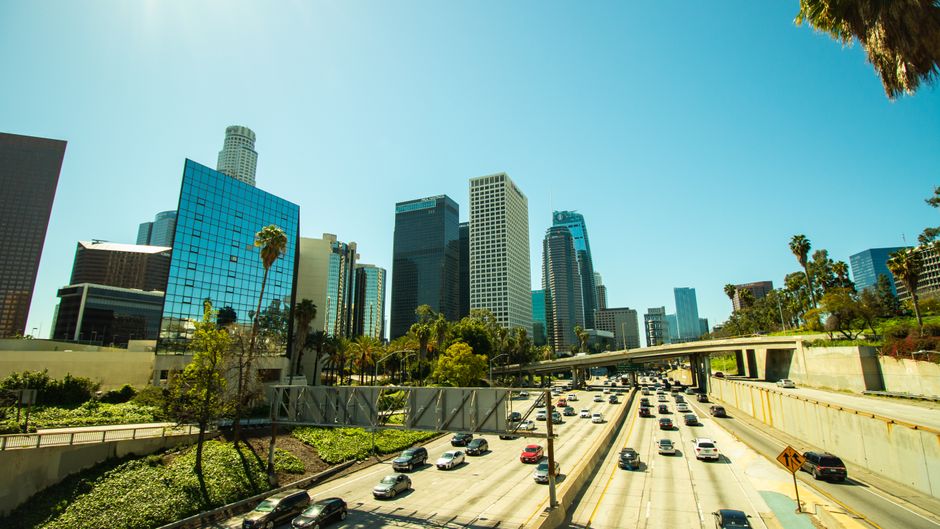
Los Angeles Unified School District's recent push to modernize classrooms on the Eastside mirrors a worldwide trend: major cities are scrambling to reimagine education in an era of artificial intelligence, teacher shortages, and shrinking public budgets. The question is whether the nation's second-largest school system is keeping pace with its global peers.
LAUSD's $15 billion bond approved in 2020 aimed to upgrade aging infrastructure across neighborhoods from Boyle Heights to South LA. Yet compared to Singapore's government-backed tech integration initiatives or Toronto's aggressive mental health counseling programs, LA's rollout has been uneven. District officials acknowledge that while new STEM labs are opening at Lincoln High School in East LA and Franklin High in Highland Park, the pace lags behind peer cities that moved faster on digitalization.
"We're playing catch-up," admits one education policy analyst tracking the district. LAUSD currently spends roughly $18,000 per student annually—below the national average of $20,000, and considerably less than Singapore's $14,000 per capita investment spread across a far smaller population with centralized planning.
The teacher compensation gap stings most acutely. Los Angeles educators earn a median $75,000, competitive domestically but trailing Melbourne and Berlin, where housing costs and salaries align more favorably. The district lost over 5,000 teachers in the past two years, a hemorrhaging that mirrors London's crisis but outpaces recovery efforts seen in Paris, where retention bonuses gained traction.
Where LA excels is in equity-focused innovation. The district's multilingual learner programs across neighborhoods with heavy immigrant populations—particularly in the San Fernando Valley and Central LA—are recognized internationally as models. Meanwhile, partnerships between UCLA, USC, and local high schools create pathways that cities like Barcelona are only beginning to replicate.
Private institutions paint a different picture. USC's engineering programs rank globally elite, while Loyola Marymount University on Bluff Road has expanded sustainability-focused curricula ahead of many competitors worldwide. Yet this excellence remains geographically concentrated, reinforcing the two-tiered system that separates coastal institutions from struggling public schools in Koreatown and Watts.
The uncomfortable truth: Los Angeles functions like two education systems. Wealthy enclaves near the Getty Center rival any world capital in resources and outcomes. But neighborhoods south of the 10 Freeway face challenges more similar to developing nations than peer global cities. Until LAUSD and local universities bridge that chasm strategically—as Singapore and Vienna have through aggressive redistribution—LA's position as an education leader remains aspirational rather than assured.
This article was compiled by AI from the sources linked above and screened before publishing. See our editorial standards.
How does this story make you feel?
Spread the word
About this article
Published by The Daily Los Angeles
Daily brief
Free, in your inbox before 7am. Weekdays.
More in News