What Empty Office Towers Tell Us About LA's Economic Future
As vacancy rates climb and rents fall across Downtown and West LA, commercial real estate data reveals shifting investment patterns that could reshape the city's economy.
As vacancy rates climb and rents fall across Downtown and West LA, commercial real estate data reveals shifting investment patterns that could reshape the city's economy.
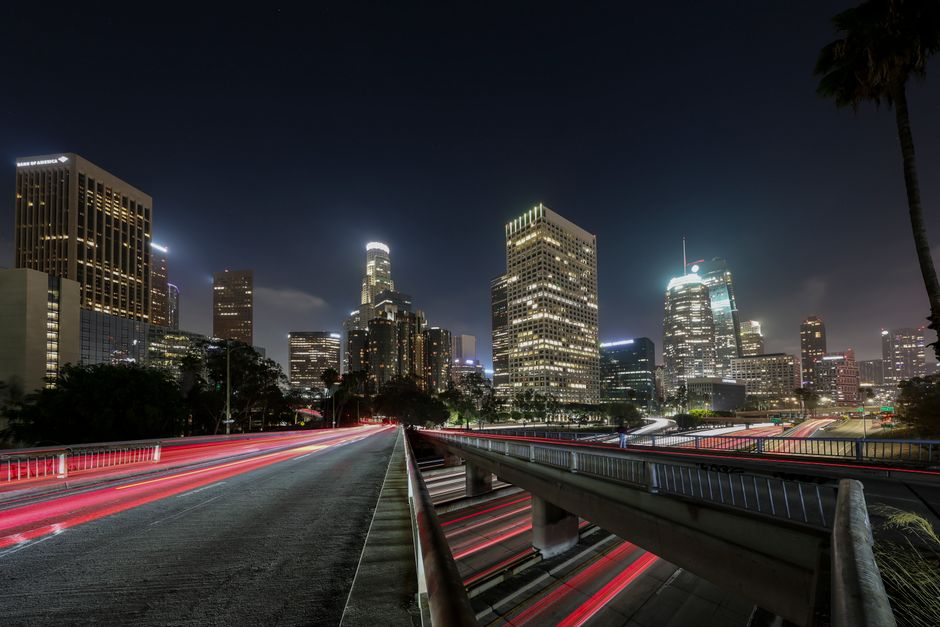
Los Angeles's commercial property market is flashing warning signals that economists say offer clearer insight into broader economic health than headlines alone can capture. Downtown Los Angeles office vacancy has climbed to roughly 22 percent, a sharp contrast to the pre-pandemic benchmark of 12 percent, while asking rents have compressed to an average of $26 per square foot annually—down from peaks near $40 just three years ago.
This isn't isolated distress. Across the Westside corridor, from Santa Monica to Century City, similar pressures are reshaping tenant behavior and investor calculations. Commercial real estate serves as an early warning system for economic conditions because companies vote with their lease commitments. When major corporations downsize their footprint or fail to renew, it signals contraction before unemployment figures confirm it.
The data matters locally because it shows how investment capital flows have shifted. Institutional investors—pension funds, REITs, and foreign capital that once queued for Los Angeles office acquisitions—have become cautious. Capital deployment has slowed measurably. According to commercial property trackers, transaction volume in LA's office sector fell roughly 40 percent year-over-year through the first half of 2026, suggesting investors are either waiting for better entry prices or redirecting funds entirely.
That reallocation carries implications. When office investment dries up, ancillary spending contracts. Fewer deals mean fewer brokerage fees; reduced tenant occupancy means fewer workers commuting to Downtown's restaurants, retail, and services along Spring Street and Broadway. The economic multiplier effect ripples through neighborhoods dependent on office-district foot traffic.
Yet the picture isn't uniformly bleak. Life sciences real estate in West Los Angeles and Pasadena continues absorbing capital. Industrial logistics space near the ports remains competitive. These sectoral divergences tell investors something critical: not all commercial real estate is created equal, and geographic and use-case specificity matters enormously in a city as economically diversified as Los Angeles.
For business leaders, property owners, and city planners, reading these signals accurately proves crucial. Office conversion projects—transforming vacant towers into residential units—have gained traction, but they require different financing models and regulatory pathways than traditional office leasing. Understanding whether capital is truly abandoning commercial real estate or simply redeploying into different asset classes determines strategic responses.
The broader economic lesson: when major cities' commercial real estate markets contract, stakeholders should investigate which sectors attract capital and which face structural headwinds. In Los Angeles, that distinction increasingly separates resilience from risk.
This article was compiled by AI from the sources linked above and screened before publishing. See our editorial standards.
How does this story make you feel?
Spread the word
About this article
Published by The Daily Los Angeles
Daily brief
Free, in your inbox before 7am. Weekdays.
More in Business