LA's Office Market Sends Mixed Signals: What Economic Indicators Really Tell Investors
Capital flows and vacancy rates reveal where smart money is betting on Los Angeles's commercial real estate recovery.
Capital flows and vacancy rates reveal where smart money is betting on Los Angeles's commercial real estate recovery.
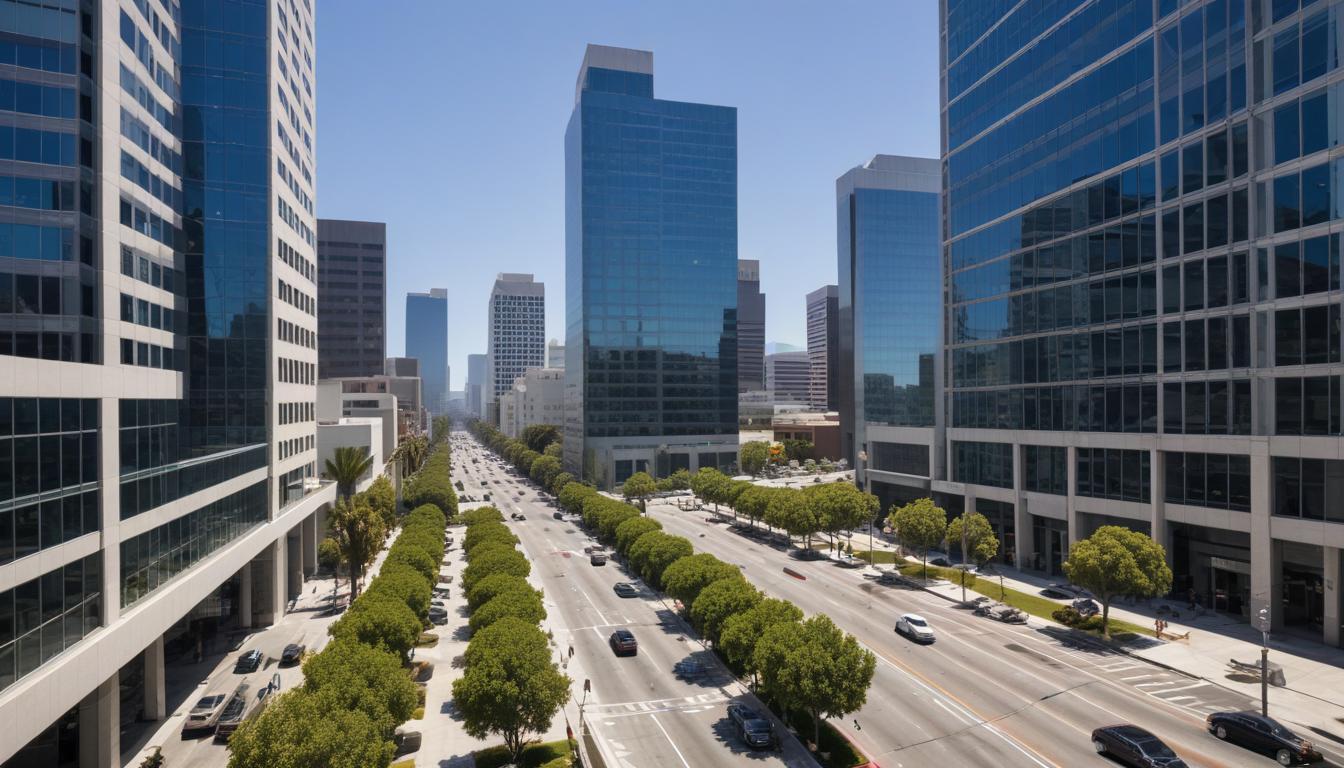
Los Angeles's commercial office market is telling two stories simultaneously, and understanding the difference between them could mean millions for investors watching from afar.
The headline numbers look sobering. Downtown Los Angeles office vacancy rates hovered around 19% in early 2026, well above the pre-pandemic historical average of 12%. Similar pressures grip Century City and Westwood, where Class A office towers offer significant concessions to tenants—free rent periods, tenant improvement allowances, and flexible lease terms have become standard negotiating tactics. Yet beneath these macro headwinds, capital is quietly repositioning.
The key indicator investment professionals are watching is absorption—net change in occupied space—rather than raw vacancy. While towers along Wilshire Boulevard's financial corridor show outflows, selective neighborhoods are bucking the trend. Culver City's creative district, anchored by major entertainment and tech companies, recorded positive absorption of 142,000 square feet in the first quarter of 2026. Similarly, Santa Monica's Ocean Park area, home to aerospace and biotech firms, attracted $287 million in institutional capital during the same period, according to commercial real estate tracking firms.
What's driving these flows? The answer lies in understanding which economic indicators truly matter. Traditional office demand—measured by companies needing desks for full-time workers—remains weak as remote work persists. But demand for specialized facilities is surging. Life sciences buildouts, particularly in West Los Angeles near UCLA's growing biotech corridor, account for nearly 30% of new commercial investment. These aren't traditional office users; they're laboratories, requiring entirely different infrastructure and commanding premium rents above $6 per square foot annually.
Institutional investors are reading the migration patterns. Capital from Canadian pension funds and Singapore sovereign wealth managers has increasingly targeted adaptive reuse opportunities—converting older office stock into mixed-use developments combining residential, retail, and flexible workspace. The Produce District near the Arts District has emerged as a testing ground, with three major conversion projects announced since 2025.
Interest rate expectations matter enormously. The Federal Reserve's measured approach to rate cuts through mid-2026 has stabilized cap rates around 5.5% to 6% for stabilized properties, making LA office competitive again relative to other major metros. However, this assumes occupancy stabilization—the economic variable with greatest uncertainty.
For investors, the lesson is clear: Los Angeles's office market isn't uniformly distressed. Rather, it's undergone tectonic shifts. Capital is rotating toward specialized uses, geographic micro-markets, and value-add repositioning strategies. Generic office towers face structural headwinds. But adaptive investors reading these economic signals are finding opportunity in a market that appears weaker than it actually is.
This article was compiled by AI from the sources linked above and screened before publishing. See our editorial standards.
How does this story make you feel?
Spread the word
About this article
Published by The Daily Los Angeles
Daily brief
Free, in your inbox before 7am. Weekdays.
More in Business


