LA's Shifting Investment Landscape: What Market Trends Mean for Your Bottom Line Right Now
As capital flows realign and cost pressures mount across the region, local business leaders must navigate a complex financial environment—and fast.
As capital flows realign and cost pressures mount across the region, local business leaders must navigate a complex financial environment—and fast.
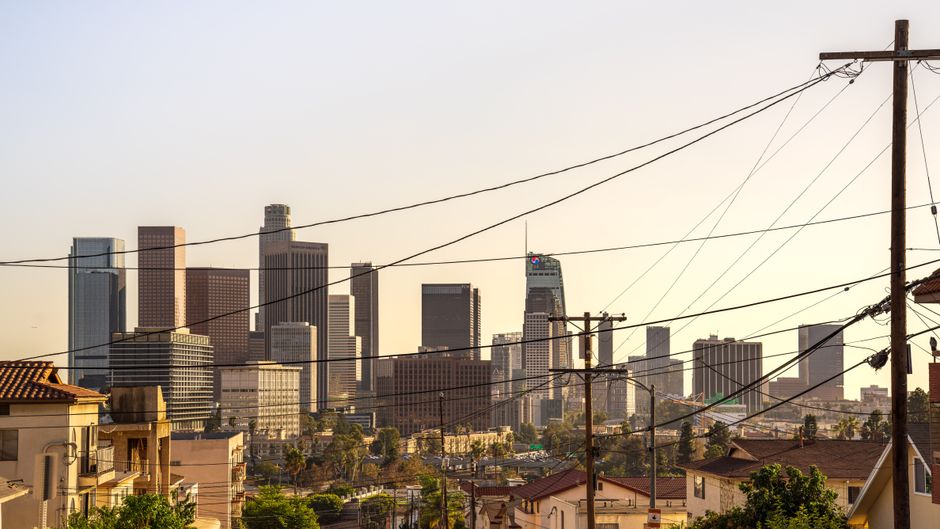
Los Angeles's business community faces a critical inflection point as mid-2026 market dynamics reshape investment priorities and operating costs across the region. From Downtown's tech corridors to Santa Monica's venture ecosystem, the calculus for growth has fundamentally shifted in ways every business owner needs to understand.
The broadest trend: capital is becoming more selective. While LA remains a global investment hub, the days of abundant, easy funding are behind us. Venture funding rounds in the region have grown more cautious, with investors increasingly demanding clear paths to profitability rather than growth-at-all-costs strategies. For startups along the Westside and in the Arts District, this means tighter terms and more rigorous due diligence. Commercial real estate across Central Los Angeles and the Koreatown corridor reflects this shift too—premium office space that commanded $60-$75 per square foot two years ago now sits at lower demand, forcing landlords to recalibrate expectations.
Cost pressures, meanwhile, remain acute. Labor expenses in LA continue climbing, with skilled workers across tech, hospitality, and creative industries commanding premium salaries. Operational costs—utilities, logistics, insurance—have stabilized but remain elevated compared to pre-pandemic baselines. For businesses operating along the Sunset Boulevard entertainment corridor or in the Port of Los Angeles's logistics hub, supply chain efficiency has become not just a competitive advantage but a survival metric.
Consumer spending patterns are equally telling. Middle-market consumers in neighborhoods like Silver Lake, Palms, and Long Beach show increased price sensitivity, forcing retail and service businesses to reconsider margin structures. Luxury goods maintain strength, but mass-market discretionary spending has contracted measurably over the past quarter.
What should LA business leaders do? First, audit your cost structure ruthlessly. Second, reassess your funding strategy—the venture capital playbook that worked in 2024 won't work in 2026. Third, focus on unit economics and cash flow rather than revenue growth alone. Fourth, consider diversifying revenue streams rather than betting everything on single market segments.
The macro environment—geopolitical uncertainty, shifting interest rates, and economic headwinds globally—means LA's traditionally resilient business ecosystem faces genuine headwinds. But history shows the city's companies that survive downturns do so by being disciplined, adaptive, and ruthlessly focused on fundamentals. That's the playbook right now.
This article was compiled by AI from the sources linked above and screened before publishing. See our editorial standards.
How does this story make you feel?
Spread the word
About this article
Published by The Daily Los Angeles
Daily brief
Free, in your inbox before 7am. Weekdays.
More in Business