LA's Office Market Recalibrates: What Businesses Need to Know Right Now
As hybrid work reshapes demand, savvy companies are repositioning in emerging submarkets while downtown and Westside Class A space faces a reckoning.
As hybrid work reshapes demand, savvy companies are repositioning in emerging submarkets while downtown and Westside Class A space faces a reckoning.
Los Angeles's commercial real estate landscape is undergoing a decisive shift that demands attention from business leaders making space decisions. After years of remote work volatility, the market is finally settling into a new equilibrium—one that rewards flexibility and punishes inflexibility.
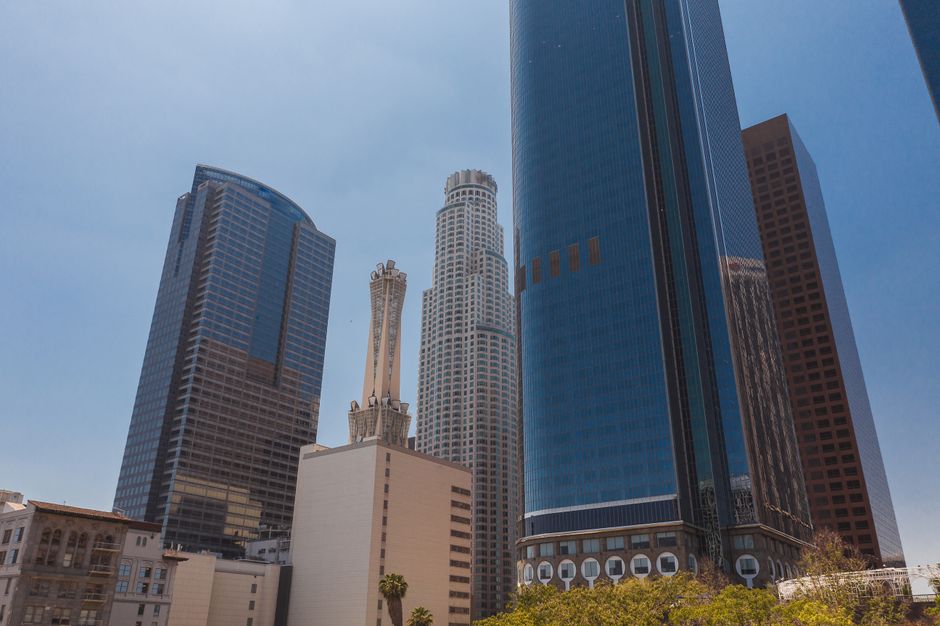
The headline story: Downtown LA's office vacancy rate has stabilized around 18-20%, but that masks deeper movement. While iconic buildings along Flower Street and South Hope Street have found renewed interest from media and tech companies seeking prestige addresses, secondary corridors remain challenged. Meanwhile, submarkets like Playa Vista, Marina del Rey, and increasingly, the Arts District, are capturing growth that once defaulted to Westwood or Century City.
Playa Vista has emerged as the strongest performer, with Class A office space commanding $5.00-$5.75 per square foot annually—a premium reflecting its appeal to entertainment tech and aerospace firms. The neighborhood's proximity to major studios and its established life sciences corridor continue attracting tenants who might have previously looked eastward. The Arts District, traditionally industrial, is now fielding serious interest from creative agencies and design firms seeking character and authenticity at competitive rates of $3.50-$4.25 per square foot.
Westside markets tell a different story. Beverly Hills and Century City, once commanding $6.00+ annually, have seen pressure as companies reevaluate their real estate footprints. Tenants are downsizing by roughly 20-30% compared to pre-2020 leases, embracing activity-based working that emphasizes collaboration over assigned seating.
For business leaders, several trends warrant immediate consideration. First, flexibility is currency—landlords offering shorter lease terms and smaller floor plates are outcompeting traditional mega-lease propositions. Second, location decisions should factor in employee transit accessibility; companies are discovering that Laurel Canyon commutes test retention harder than expected. Third, Class B properties are unexpectedly resilient; companies are finding that $4.00-$4.50 per square foot in well-maintained secondary buildings outperforms Class A economics when accounting for actual occupancy rates.
The San Fernando Valley, long overlooked, presents opportunity. Burbank's media cluster and Culver City's creative community are attracting tenants priced out of coastal submarkets, with rates 30% below Westside equivalents.
Businesses should avoid the trap of oversizing. The market is rewarding companies making intentional, right-sized decisions based on actual utilization data—not outdated assumptions about office density. By late 2026, those distinctions will separate winners from those managing costly underutilized leases.
This article was compiled by AI from the sources linked above and screened before publishing. See our editorial standards.
How does this story make you feel?
Spread the word
About this article
Published by The Daily Los Angeles
Daily brief
Free, in your inbox before 7am. Weekdays.
More in Business