Why Los Angeles Is Becoming the World's Clean Energy Tech Capital
From Santa Monica to Downtown, the city's unique blend of climate urgency, venture capital, and entertainment industry muscle is reshaping global sustainability innovation.
From Santa Monica to Downtown, the city's unique blend of climate urgency, venture capital, and entertainment industry muscle is reshaping global sustainability innovation.
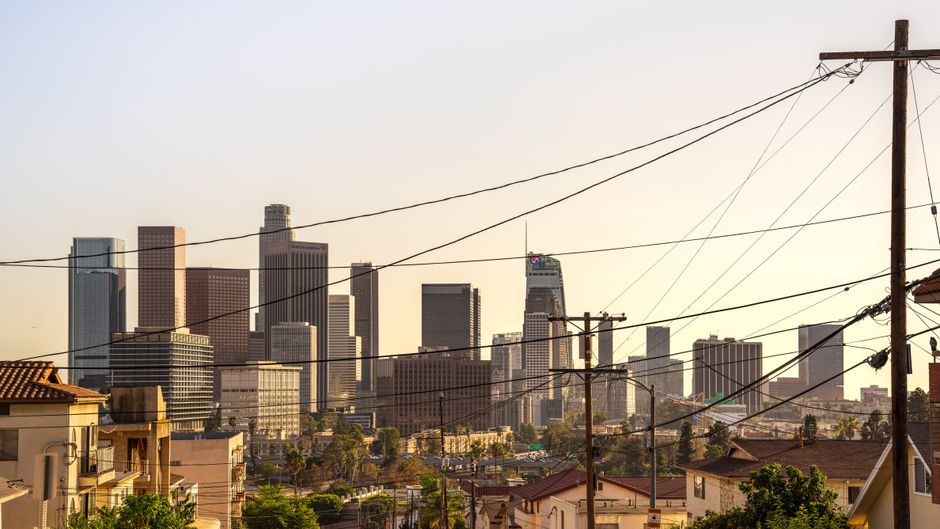
Los Angeles didn't invent the clean energy revolution, but it's rapidly becoming the place where it gets scaled, funded, and exported worldwide. Unlike Silicon Valley's software dominance or Boston's biotech clustering, LA's green tech ecosystem thrives on something far more local: the collision between existential climate pressure and the capital-intensive demands of retrofitting a sprawling megacity.
"We have 15 million people depending on energy systems built in the 1970s," explains the reality facing local entrepreneurs in the South Coast Air Quality Management District region. That pressure has created a vacuum of opportunity. Companies like those headquartered along the Wilshire Corridor and in the burgeoning Playa Vista tech enclave aren't solving theoretical problems—they're solving immediate ones that 4 million residents face daily.
The numbers tell the story. California's clean energy venture funding reached $14.2 billion in 2025, with Los Angeles County capturing roughly 30 percent of that activity. But LA's distinction isn't just capital volume; it's the type of capital and the problems it chases. Battery storage, grid modernization, sustainable aviation fuels, and carbon removal technologies dominate local venture portfolios—heavy infrastructure plays that require both deep pockets and patient capital.
Three factors make LA distinctive globally. First, the entertainment industry's sustainability commitments have created a de facto sustainability standard-setting body. Major studios' carbon-neutral mandates by 2030 mean cleantech companies have anchor clients willing to pay premium prices for unproven solutions—a luxury most startups never access. Second, proximity to Port of Los Angeles, the nation's busiest container hub, has spawned an entire subsector around maritime electrification and zero-emission logistics. Third, the city's geographic isolation—surrounded by mountains that trap smog—transformed environmental regulation into competitive advantage rather than burden.
The ecosystem clusters visibly. Santa Monica hosts climate-focused venture funds and policy innovation labs. Downtown's Arts District has become surprisingly central to sustainable building tech demonstrations. Long Beach, just south, has essentially become North America's testing ground for port electrification projects, with $300 million in recent clean cargo handling infrastructure investments.
This isn't accident. Los Angeles spent decades as a cautionary tale about air quality and sprawl. That dark history created political will for transformation that most global cities lack. Today, that creates an environment where cleantech founders can raise Series A funding faster than their Silicon Valley counterparts, so long as their solution addresses real infrastructure problems. For a city once synonymous with smog, that's not just distinctive—it's revolutionary.
This article was compiled by AI from the sources linked above and screened before publishing. See our editorial standards.
How does this story make you feel?
Spread the word
About this article
Published by The Daily Los Angeles
Daily brief
Free, in your inbox before 7am. Weekdays.
More in tech