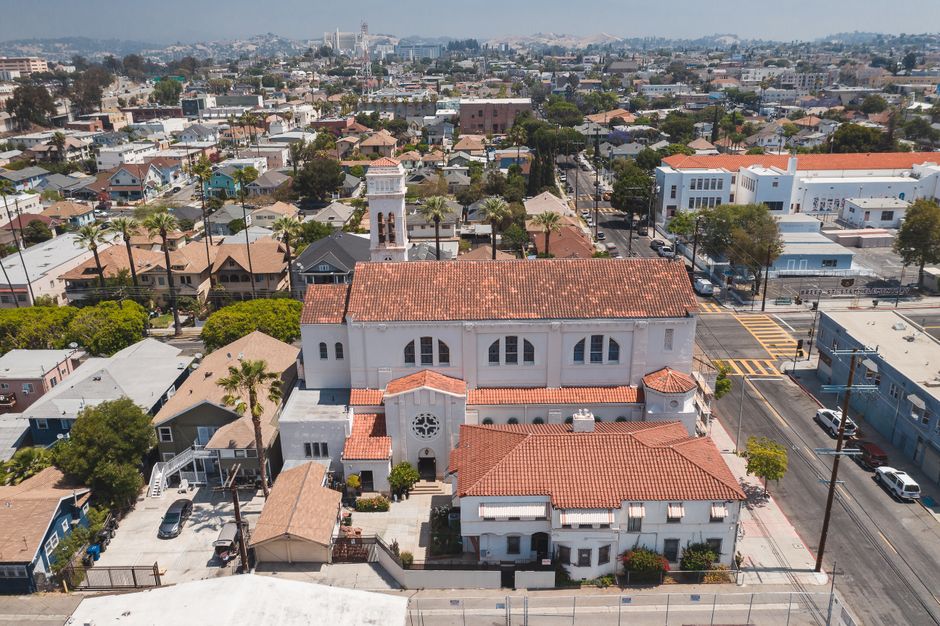
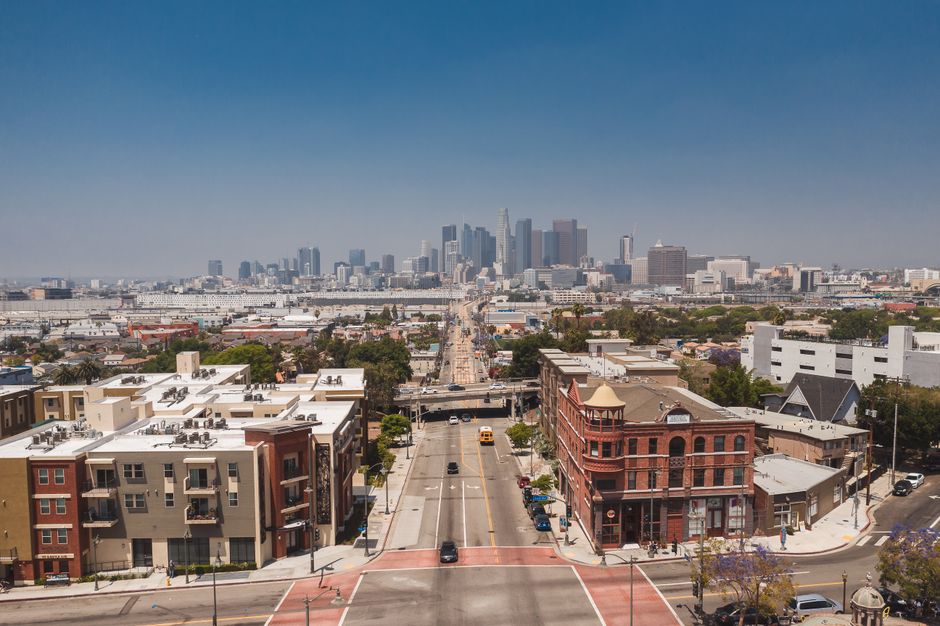
The numbers look familiar. Los Angeles County's median home sale price has returned to roughly $870,000 as of June 2026, matching the frothy peaks that briefly appeared in spring 2022 before the Federal Reserve's rate hikes gutted purchasing power across the region. But sit with any serious buyer's agent working Silver Lake or East LA right now and the story they tell is almost the opposite of what happened five years ago.
This matters because the comparison is doing real work in the marketplace. Sellers who bought in 2020 and 2021 are pricing their homes against memories of 11-offer Saturdays on Micheltorena Street. Buyers, meanwhile, are leaning on the same history to justify hesitation — convinced another correction must be coming. Both assumptions are distorting decisions across hundreds of transactions every month in a county of more than 10 million people.
What 2021 Actually Looked Like
The 2021 boom was a specific, unrepeatable event. The 30-year fixed mortgage rate sat below 3 percent for most of that year. Remote-work money poured into Echo Park bungalows and Mid-City craftsmen from buyers who had sold condos in San Francisco and had cash to burn. The California Association of Realtors reported that the statewide median days on market dropped to 8 days in May 2021 — a figure that agents who lived through it still describe as hallucinatory. Contingency waivers were standard. Appraisal gaps of $100,000 or more were routine on properties near Griffith Park and along the Silverlake Reservoir.
None of that is happening today. The 30-year fixed rate is hovering around 6.6 percent as of early July 2026, according to Freddie Mac's weekly survey. That rate alone adds roughly $1,400 a month to the carrying cost of a median-priced LA home compared to a 2021 purchase. Inventory in LA County has climbed — active listings are up approximately 22 percent year-over-year, according to data tracked through the California Regional Multiple Listing Service. Homes in Hollywood Hills and Bel Air that would have gone $500,000 over ask in March 2022 are now sitting for 30, sometimes 45 days before an offer arrives.
Where the Action Is — and Isn't
East LA and the unincorporated communities around Boyle Heights are the clearest exception to the general slowdown. Prices along Cesar Chavez Avenue and the corridors feeding into Montebello have held stubbornly, driven by a near-total absence of new supply and sustained demand from first-generation buyers who aged out of rentals. The ADU building boom — accelerated by state Senate Bill 9, which LA's Department of Building and Safety began processing at scale in 2023 — has added secondary units to thousands of lots in these neighborhoods, but it has not materially softened prices on primary residences. If anything, the rental income from a new rear ADU is now a selling point that justifies list prices 8 to 12 percent above pre-ADU comps on the same block.
Silver Lake's retail real estate index, tracked informally by the Silver Lake Chamber of Commerce, shows that turnover in mixed-use properties along Sunset Boulevard has slowed significantly since 2024 — partly because owners who refinanced at sub-3-percent rates in 2021 have no financial incentive to sell into a 6.6-percent world. That lock-in effect is the single biggest structural difference between now and the last cycle. Supply is constrained not by construction delays but by owner inertia.
For buyers navigating this environment, the practical reality is that the negotiating leverage that evaporated in 2020 has partially returned — but not evenly. Properties in the $650,000 to $900,000 band in Glassell Park and Lincoln Heights are seeing price reductions of 3 to 6 percent from original list. Anything below $600,000 anywhere inside the 405-101-10 triangle still moves fast. Buyers who can accept a rate now and refinance if the Fed cuts in late 2026 or early 2027 are in a stronger position than those waiting for a price collapse that market fundamentals, at least in LA's supply-starved core, don't yet support.