What LA's Auction Block Is Telling Us About the Affordable Housing Crisis
Recent land sales and clearance data reveal a troubling gap between market realities and the city's social housing ambitions.
Recent land sales and clearance data reveal a troubling gap between market realities and the city's social housing ambitions.
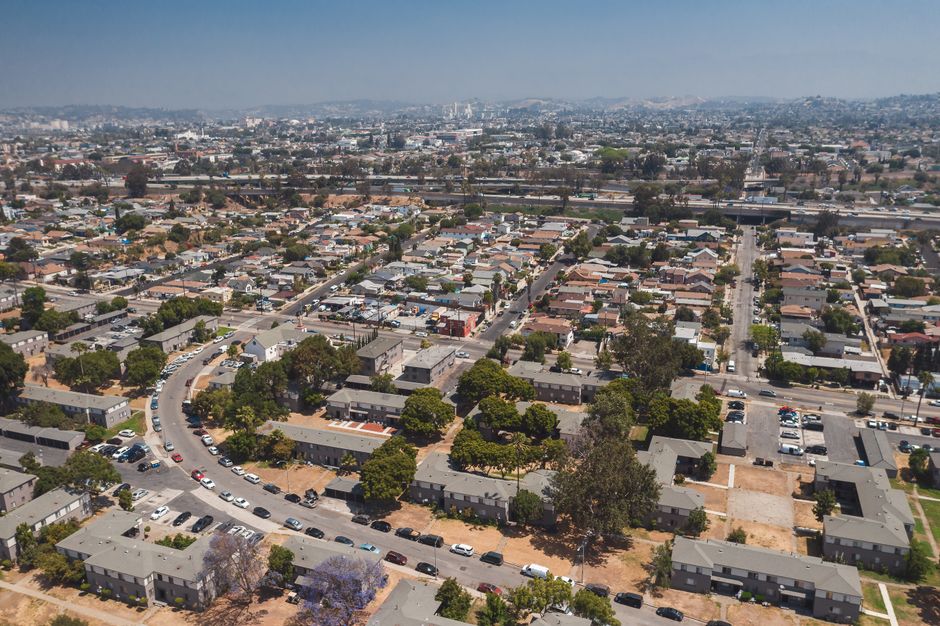
Los Angeles is caught in a paradox. While the median home price hovers near $870,000—pricing out nurses, teachers, and service workers—recent auction results and land sales data are sending a blunt message: the math for affordable housing simply isn't working in the city's favour.
Last month, a vacant parcel in Boyle Heights sold for $1.8 million, a figure that would have seemed unthinkable five years ago. The lot sits 12 blocks from Evergreen Cemetery, in a neighbourhood that activists have fought to preserve as working-class East LA gentrifies at an accelerating pace. The price tag, however, tells the real story: developers see dollar signs where the city sees opportunity for social housing.
This disconnect matters because LA's Housing Department has pinned hopes on acquiring land for Below Market Rate (BMR) units. Yet clearance rates at municipal land auctions have hit lows not seen since 2019, suggesting fewer parcels are making it to the block—and those that do are fetching prices that dwarf affordable housing budgets. When a single lot in Boyle Heights exceeds $1.8 million, the $500,000 to $700,000 that city housing programs typically allocate per unit becomes almost theoretical.
The pressure is visible across the basin. Silver Lake and Echo Park, once affordable havens for artists and young families, now average $1.2 million for a modest two-bedroom. The Hollywood Hills and Bel Air remain out of reach for anyone not connected to entertainment wealth. Meanwhile, East LA's growth has been real—but so has the displacement. New construction there is increasingly market-rate or luxury-focused, not the mixed-income projects the city desperately needs.
The ADU boom offers a glimmer of hope. Accessory dwelling units have become LA's quiet affordable housing engine, with thousands approved across neighbourhoods from Koreatown to Westchester. Yet ADUs alone cannot solve a crisis where land acquisition itself has become prohibitively expensive.
City planners acknowledge the crunch. Recent policy moves—density bonuses, zoning reforms, streamlined approvals—are designed to make pencils sharper. But auction data and market prices suggest policy alone may not be enough. When raw land in working-class neighbourhoods commands premium prices, the gap between policy intent and market reality widens.
The question facing LA's next administration is stark: can affordable housing be built when the land beneath it has become a speculative commodity? Auction results suggest the answer is increasingly no—unless the city is willing to pay market rates or fundamentally reshape how it acquires property.
This article was compiled by AI from the sources linked above and screened before publishing. See our editorial standards.
How does this story make you feel?
Spread the word
About this article
Published by The Daily Los Angeles
Daily brief
Free, in your inbox before 7am. Weekdays.
More in Property