Los Angeles' property market has long been shaped by geography and celebrity postcodes, but a quieter force is now rewriting the investment playbook: zoning reform. Recent policy changes allowing Accessory Dwelling Units (ADUs) across more of the city, combined with streamlined commercial-to-residential conversion rules, are creating unexpected opportunities in neighbourhoods that traditionally lagged behind Silver Lake's $1.4 million median and the Hollywood Hills' stratospheric prices.
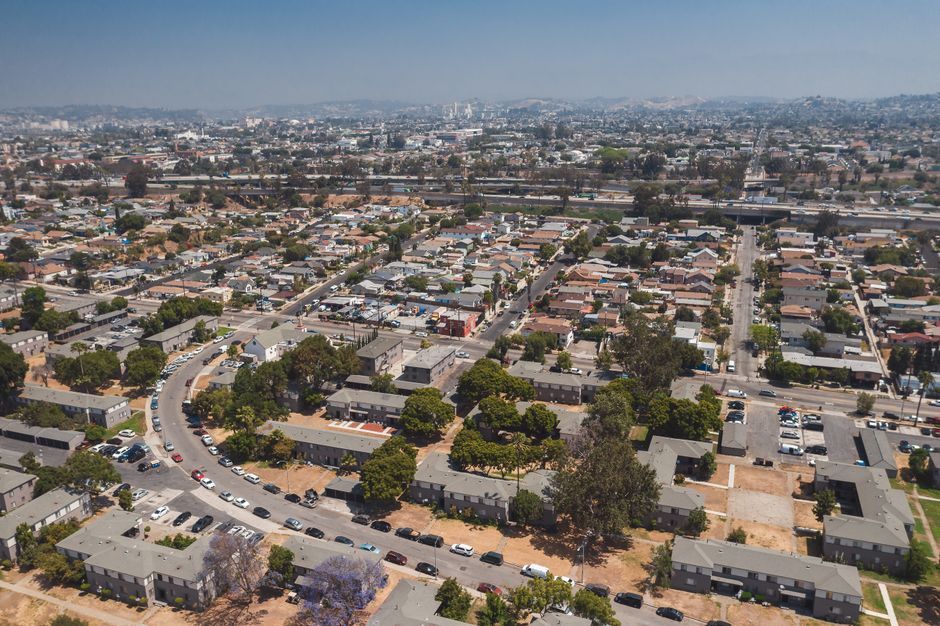
East LA is the clearest case study. While the broader city median sits at $870,000, properties along Whittier Boulevard and Cesar Chavez Avenue—areas that were largely single-family, lower-density zones three years ago—are now attracting developer interest. The city's 2023 ADU ordinance expansion, which simplified approval processes and eliminated parking requirements for qualifying properties, has triggered a quiet boom. Investors who bought modest homes on side streets near Boyle Heights for $550,000 to $650,000 in 2024 are now seeing rental potential doubled through legal ADU additions, effectively bridging the affordability gap that city planners have long targeted.
Silver Lake and Echo Park present a different but equally revealing picture. The 2024 decision to permit limited commercial-to-residential conversions on selected corridors—including parts of Sunset Boulevard and Silver Lake Boulevard—has transformed vacant storefronts and underutilised office space into development opportunities. A former print studio near the Silver Lake Reservoir sold for $2.1 million in early 2026, a price that reflected not current retail value but future residential potential under the new framework.
These changes carry unintended consequences. Property values in East LA's Boyle Heights precinct rose 12 percent year-on-year through mid-2026, outpacing the broader city's 7 percent growth. While this attracts investor capital and tax revenue, longtime residents face rising property taxes and displacement pressure—a tension the city's 'Home for a Home' initiative aims to address through community land trusts and first-generation homeowner protections.
The policy shift also reveals market inefficiencies. Areas like Highland Park and Lincoln Heights, which qualify for similar ADU and conversion benefits but lack Silver Lake's cultural cachet, remain undervalued relative to their development potential. Savvy investors are pricing in future zoning expansion before it formally arrives.
For developers and property investors, the lesson is clear: in 2026's LA market, policy blueprints matter as much as postcodes. The neighbourhoods making headlines aren't always the ones with the highest current prices—they're the ones where planning decisions are unlocking hidden density and, with it, genuine investment returns.
This article was compiled by AI from the sources linked above and screened before publishing. See our editorial standards.