news
LA Metro expansion disrupts millions as 2028 Olympics deadline looms.
As tunneling crews push toward the 2028 Olympic deadline, Angelenos are absorbing construction disruption that peer cities managed with far more transit alternatives.
How we reported this
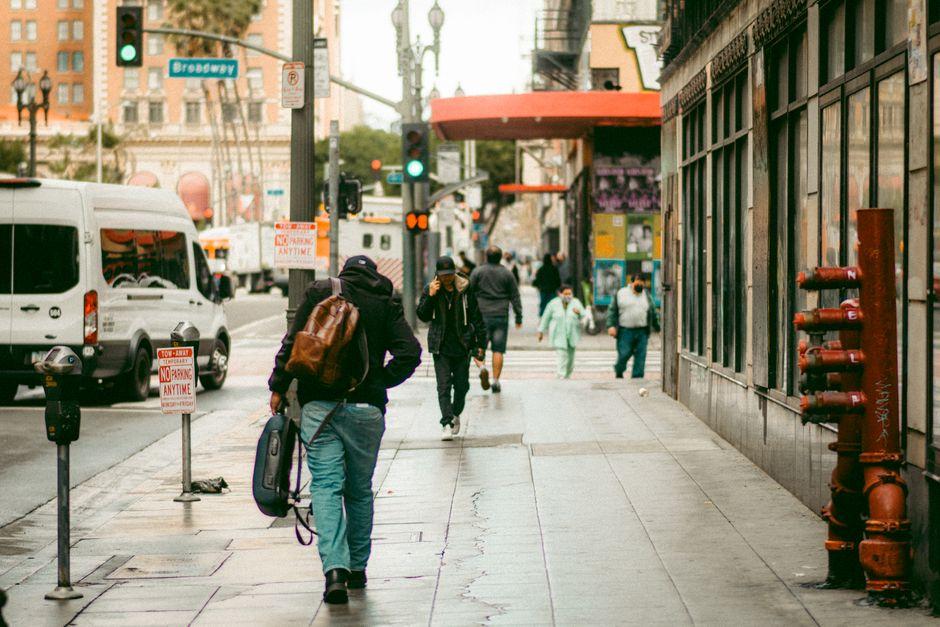
The intersection of Wilshire Boulevard and Vermont Avenue has been a construction obstacle course for 14 months. Lanes disappear without warning. Bus stops relocate mid-month. And the Purple Line Extension, Metro's most ambitious dig since the Red Line opened in 1993, is still at least two years from welcoming its first passengers through the Westwood station portal. With the 2028 Summer Olympics now 25 months out, the pressure on the Los Angeles County Metropolitan Transportation Authority is no longer theoretical.
Metro is simultaneously running construction on three major corridors: the Purple Line's Section 3 push toward the VA Campus in Brentwood, the Crenshaw/LAX Line's northern connector work, and early civil engineering on the East San Fernando Valley Transit Corridor. The agency reported in its June 2026 board documents that capital spending for the fiscal year hit $2.4 billion, the highest single-year outlay in the authority's history. That money is moving dirt. It is also moving commuters' patience to its limit.
What Other Cities Did Differently
London spent roughly a decade building Crossrail, now the Elizabeth Line, and drew consistent criticism for how Oxford Street construction gutted retail foot traffic. But Transport for London operated 11 other Underground lines throughout, giving displaced riders options measured in minutes, not miles. Tokyo's expansion of the Fukutoshin Line in 2008 came with a dense surface bus network that absorbed overflow automatically. Los Angeles has neither luxury. Metro's bus ridership, which stood at roughly 900,000 boardings per weekday before the 2020 pandemic, has only partially recovered, sitting around 680,000 daily boardings as of Metro's May 2026 count. The rail network is too sparse to redirect anyone efficiently.
The contrast cuts sharper when you look at Madrid, which opened six new Metro stations between 2021 and 2024 while maintaining 99.1 percent service availability on its existing 302-kilometer network. Madrid accomplished that partly through a contractor accountability model that penalizes delays with fines drawn directly from the construction consortium's bond. Metro LA's contracts contain performance incentives, but the financial penalties for schedule slippage are considerably softer, according to the agency's own Office of the Inspector General review filed in March 2026.
Neighborhoods Absorbing the Damage Now
Koreatown is the most visibly strained. The Western Avenue corridor between 3rd Street and Olympic Boulevard has seen three separate utility relocation projects run concurrently with Purple Line tunneling work. Local business owners along that stretch told the Koreatown Business Improvement District in a May survey that foot traffic dropped an average of 31 percent compared to the same period in 2024. The BID has been lobbying Metro for a small-business mitigation fund modeled on the one New York's MTA established during the Second Avenue Subway build, a program that disbursed $15 million to affected East Harlem merchants between 2015 and 2017.
Crenshaw residents are tracking a different frustration. The long-promised Leimert Park station, which opened in 2022, feeds into a line that still does not connect to LAX without a transfer and a rental car bus. The K Line's northern extension into Exposition Park, critical for Olympic logistics, is scheduled for completion by June 2028, giving construction crews almost no margin. Metro spokesperson communications reviewed this week show the agency internally flagged a 60-day buffer as the minimum needed to run test trains before certification. That buffer is already gone on paper.
For riders trying to function today, Metro's trip-planner app updated its construction-alert system in May to push real-time detour notifications. The agency also expanded its Micro-Transit Zone in the West Adams neighborhood, where on-demand vans now cover a 4.2-square-mile service area at a flat $1.50 fare, the same price as a standard bus ride. It is a useful patch, not a solution. Angelenos heading to Olympic events in two summers will need the full network to work. Right now, the full network is a construction site.