news
L.A. Defends Three Decades of Sanctuary Policy Amid Federal Enforcement Battles
From the 1979 Special Order 40 to today's federal enforcement standoffs, Los Angeles officials and immigration scholars are drawing battle lines over what sanctuary status actually means-and what it costs to keep it.
How we reported this
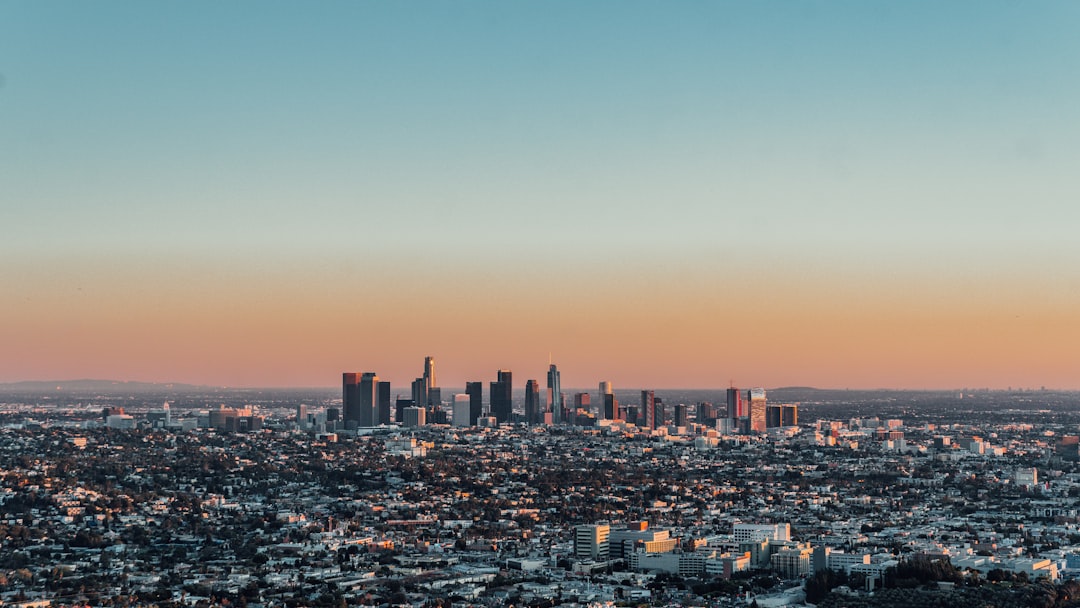
Los Angeles didn't become a sanctuary city in a single vote or a single year. The architecture of its immigrant protection policies was assembled piece by piece over three decades, beginning with Police Chief Daryl Gates's Special Order 40 in 1979, which prohibited LAPD officers from initiating contact with residents solely to investigate their immigration status. That foundational directive now sits at the center of a furious debate in 2026, as federal immigration enforcement operations have intensified across the region and city officials scramble to define what their obligations actually are.
The timing matters. With the 2028 Summer Olympics infrastructure pushing billions of dollars through the local economy and an estimated 300,000 to 500,000 undocumented workers tied to construction, hospitality, and logistics sectors, the stakes of that debate are no longer abstract. Immigration attorneys at the Coalition for Humane Immigrant Rights of Los Angeles-known as CHIRLA, headquartered on West 8th Street in Koreatown-say their intake lines have not been this busy since the enforcement surges of 2017 and 2018.
What City Hall Is Actually Saying
Mayor Karen Bass has repeatedly affirmed the city's sanctuary posture in public statements this spring, citing the Los Angeles City Council's 2021 reaffirmation of sanctuary protections as the operative legal framework. But immigration policy analysts at the UCLA Luskin School of Public Affairs argue that the gap between formal policy and street-level enforcement has never been wider. Their concern centers on cooperation between the Los Angeles Sheriff's Department-which operates independently of LAPD-and Immigration and Customs Enforcement detainer requests at facilities including the Pitchess Detention Center in Castaic. The Sheriff's Department has faced lawsuits and community pressure over that cooperation since at least 2019.
Councilmember Hugo Soto-Martínez, who represents District 13 covering Silver Lake and Echo Park, has pushed for expanded legal defense funding through the City's Immigrant Defender Program. That program, administered through Vera Institute of Justice's Los Angeles chapter, provides publicly funded legal representation to immigrants in removal proceedings-one of only a handful of such municipal programs nationally. Advocates say the program has handled more than 12,000 cases since its 2017 launch but remains underfunded relative to current caseload demands.
The Pew Research Center estimated in 2022 that approximately 850,000 undocumented immigrants lived in the greater Los Angeles metro area-roughly 13 percent of the region's total workforce. Economists at USC's Dornsife Center for Economic and Social Research have tied that population to an annual regional economic contribution exceeding $29 billion. Those numbers give sanctuary policy a fiscal dimension that downtown officials rarely ignore, even when the politics grow complicated.
The Pressure From Both Directions
Federal pressure has mounted sharply. The Department of Homeland Security formally notified the city in March 2026 that it risked losing $350 million in public safety grants unless it demonstrated greater cooperation with ICE detainer requests-a threat the city attorney's office is contesting in federal court. On the other side, community organizations including the Central American Resource Center, or CARECEN, operating out of a Pico-Union office on West Washington Boulevard, held a packed town hall in June drawing more than 400 residents who want stronger, not weaker, protections.
Legal scholars say the city's leverage is real but limited. The Supreme Court's 2018 ruling in City of Philadelphia v. Sessions gave sanctuary jurisdictions meaningful constitutional footing, but subsequent executive actions have tested those boundaries repeatedly. Los Angeles City Attorney Hydee Feldstein Soto's office has filed amicus briefs in at least three related federal cases since January.
For residents in neighborhoods like Boyle Heights, Panorama City, and the garment district blocks east of downtown, the legal arguments are secondary to immediate practical questions: what to do if ICE agents appear at a workplace or a school. CHIRLA and the Mexican Consulate on South Figueroa Street have been distributing know-your-rights cards in Spanish, Tagalog, and Mixteco. City officials say updated guidance for community members will be posted through the Mayor's Office of Immigrant Affairs website before the end of July-a deadline advocates are holding them to.