Downtown LA Office Market Reveals Where Capital Is Flowing Today
Declining occupancy rates and shifting capital flows reveal how Los Angeles's commercial real estate landscape is recalibrating in an era of hybrid work and geopolitical uncertainty.
Declining occupancy rates and shifting capital flows reveal how Los Angeles's commercial real estate landscape is recalibrating in an era of hybrid work and geopolitical uncertainty.
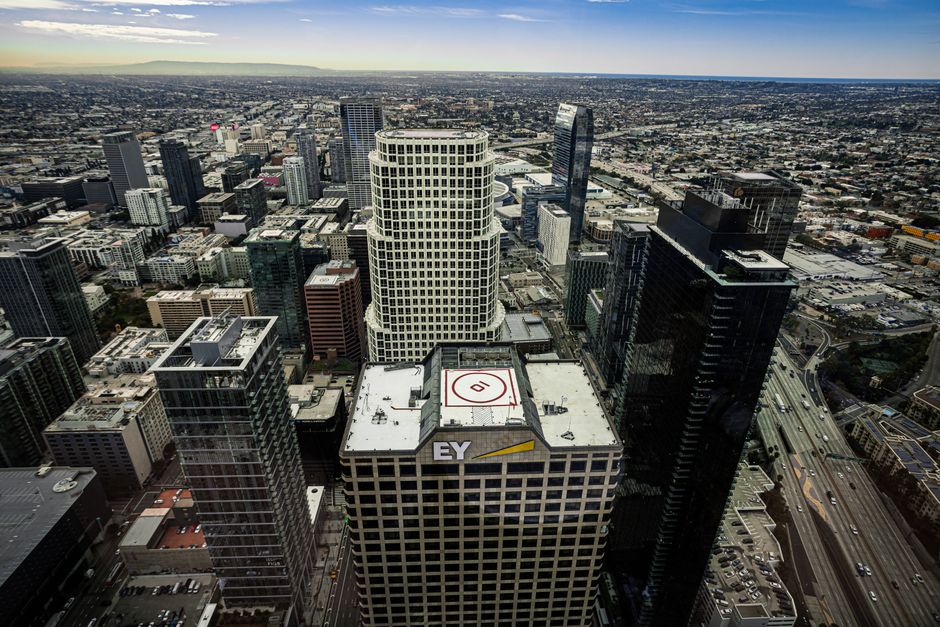
Downtown Los Angeles's office market is sending a clear message to investors: the old assumptions about workspace no longer hold. Vacancy rates in the historic core now hover around 19%, up sharply from pre-pandemic levels, while average asking rents have plateaued at approximately $28 per square foot annually—a stagnation that would have seemed unthinkable a decade ago.
But the real story isn't one of collapse. It's about capital reallocation. While Class A office space along Wilshire Boulevard has struggled, with major landlords like SL Green announcing portfolio reductions, investment is migrating toward mixed-use developments that blur the lines between work, retail, and residential. The $1.2 billion transformation of the Bloc development in downtown LA, anchored by flexible workspace operators rather than traditional corporate tenants, exemplifies this shift. Institutional investors are following suit, with pension funds and REITs increasingly favoring properties that generate revenue streams beyond desk rental.
The economic indicators underlying this movement are interconnected. Telecommuting adoption has reduced demand for traditional office footprint—companies across Los Angeles from tech startups in Playa Vista to entertainment firms in the Media District are consolidating their physical presence. Simultaneously, construction costs remain elevated, financing is expensive relative to the past decade, and cap rates (the ratio of net operating income to property value) have compressed for trophy assets while widening for secondary properties. For investors, this creates a bifurcated market where location quality, building amenities, and adaptability determine viability.
Foreign investment, historically a bulwark of LA's commercial real estate, has cooled. Capital from Asia and Europe that once pursued prime properties has grown cautious amid geopolitical tensions and currency volatility. Korean and Chinese investors, who purchased roughly 30% of prime LA office in 2015, represent a fraction of current deal flow. Meanwhile, domestic capital—venture funds, family offices, and strategic buyers—increasingly dominates transactions.
The implications ripple outward. Reduced investment activity dampens property tax revenue for the city, affects construction employment, and influences the appetite for development financing from regional banks. Yet the market is not dystopian. Institutional owners with long-term outlooks continue acquiring stabilized properties at rational prices. The Brooklyn Standard, a coworking-adjacent tenant, recently expanded its footprint in the Arts District, betting on creative-class demand that remains resilient.
For Los Angeles, the message is clear: office real estate will survive, but only properties offering flexibility, community-focused design, and revenue diversification will thrive. Capital flows toward adaptability.
This article was compiled by AI and screened before publishing. See our editorial standards.
How does this story make you feel?
Spread the word
About this article
Published by The Daily Los Angeles
Daily brief
Free, in your inbox before 7am. Weekdays.
More in Business