LA's Innovation Districts See Capital Surge: What the Numbers Really Tell Us
Fresh economic data reveals how investment flows through Downtown LA and the Westside are reshaping the region's competitive position.
Fresh economic data reveals how investment flows through Downtown LA and the Westside are reshaping the region's competitive position.
Los Angeles' startup ecosystem is sending clearer signals than ever before, and the numbers paint a picture of selective but robust capital deployment across the region's innovation corridors.
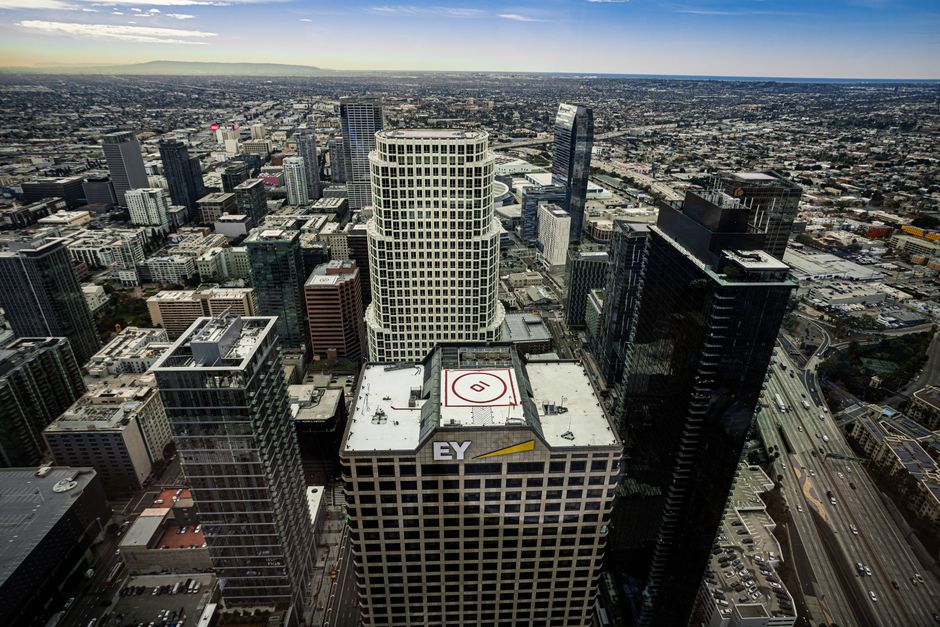
Downtown Los Angeles and the Arts District have captured $1.8 billion in venture funding over the past 18 months, according to data from the Los Angeles County Economic Development Corporation. That represents a 34% increase from the same period two years prior—meaningful growth that reflects renewed confidence in the region's ability to compete with established tech hubs. The influx has been particularly concentrated in climate tech, healthcare innovation, and entertainment technology firms clustered around Spring Street and the repurposed warehouse spaces near the LA River.
Meanwhile, the Westside corridor stretching from Santa Monica through Culver City tells a different story. Rather than explosive growth, the region—traditionally dominated by aerospace and entertainment—is experiencing a quiet consolidation. Median office rents in Culver City have stabilized around $4.20 per square foot monthly, down from $4.85 a year ago. The stabilization suggests investors are recalibrating expectations after overheated projections during the pandemic boom.
What's particularly revealing is where capital isn't flowing. Mid-market rounds—the $10-50 million checks that typically fuel scaling operations—have grown scarce. According to PitchBook data analyzed by local venture analysts, Series A and B funding in Los Angeles dropped 18% in the first half of 2026 compared to last year. This creates a troubling bottleneck: early-stage companies with promising seeds struggle to graduate to the next level.
Real estate tells the fuller story. WeWork's departure from multiple Bunker Hill locations has freed up 200,000 square feet of space, now commanding $3.50-4.00 per square foot—a 30% discount from pre-pandemic rates. Simultaneously, landlords in the Fashion District and around the Crypto-friendly Echo Park neighborhood have begun offering tenant improvement allowances, suggesting a landlord's market finally emerging after years of tenant advantage.
The broader economic indicator that matters most: employment. Los Angeles' tech sector workforce grew just 2.1% year-over-year, the slowest pace since 2019. This modest number reflects the reality that while capital continues arriving, companies are being disciplined about headcount.
For investors and entrepreneurs, the message is clear—Los Angeles remains on the venture capital map, but the era of undiscerning check-writing has ended. Capital flows are narrowing toward founders with defensible technology, clear paths to profitability, and operational discipline. For a city rebuilding its innovation identity, that's probably healthy.
This article was compiled by AI and screened before publishing. See our editorial standards.
How does this story make you feel?
Spread the word
About this article
Published by The Daily Los Angeles
Daily brief
Free, in your inbox before 7am. Weekdays.
More in Business