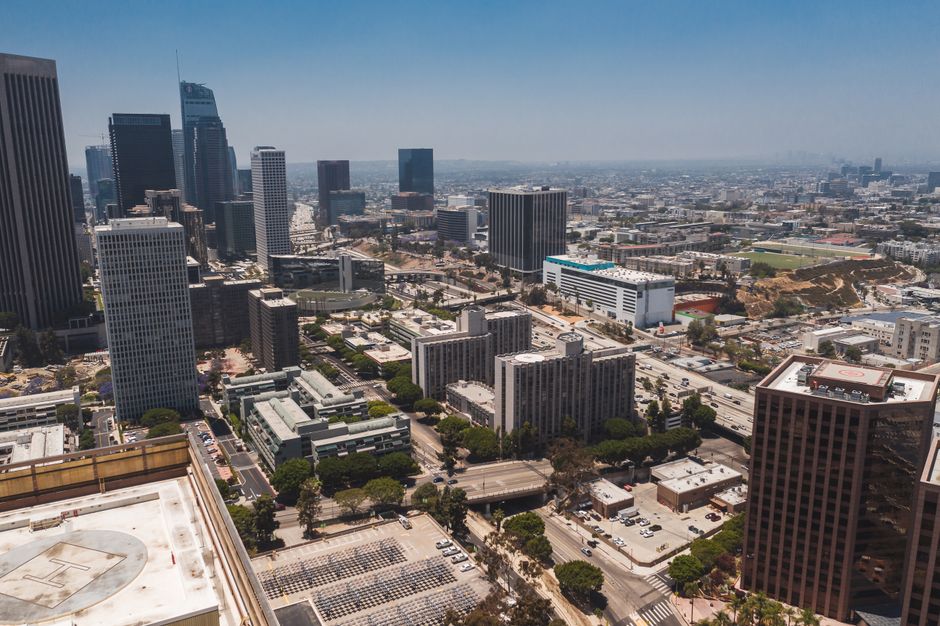
The Los Angeles commercial real estate market is at an inflection point, and the numbers tell a story far more nuanced than simple headlines about office decline suggest. For investors and business leaders trying to navigate the landscape, understanding what's actually happening beneath the surface requires parsing several key economic indicators that reveal where capital is flowing—and why.
Downtown Los Angeles has absorbed significant institutional investment this year, with conversion projects transforming older office towers into residential units. Meanwhile, the Westside market—particularly around Santa Monica and Century City—continues to command premium rents despite elevated vacancy rates. Class A office space in Century City is hovering around $6.50 per square foot monthly, compared to $4.20 in the Arts District, reflecting investor confidence in submarkets with strong amenity bases and transportation access.
The divergence matters because it reveals something critical: location-specific fundamentals now outweigh broader market trends. Tech and entertainment companies remain concentrated along the Westside corridor, where proximity to studios and venture capital networks justifies higher occupancy costs. Conversely, properties in Downtown and Mid-City corridors face pressure unless they offer adaptive reuse potential or serve as landing zones for companies downsizing their footprint.
Capital flows have shifted dramatically. Rather than traditional office-focused purchases, institutional investors—including pension funds and REITs—are rotating toward mixed-use developments that blend office, retail, and residential components. The Spring Street Market development in Downtown reflects this trend, attracting both workplace tenants and ground-floor retail operators seeking foot traffic.
Vacancy metrics provide another crucial indicator. Citywide office vacancy sits around 16.5%, but this masks critical regional variation. Newer buildings with modern amenities in walkable neighborhoods show vacancy below 12%, while aging stock on the periphery approaches 22%. This bifurcation suggests that marginal properties face structural headwinds, while high-quality assets with flexibility remain attractive.
For business leaders, the takeaway is straightforward: location quality, building flexibility, and amenity access now function as economic moats. A company evaluating expansion in Los Angeles should recognize that negotiating leverage exists across the market, but premium locations command their premium for reasons rooted in fundamentals—not speculation.
The broader economic signal is equally important: capital isn't fleeing Los Angeles, but it's becoming far more selective. That selectivity reflects maturation in how investors assess commercial property value in an era where where people work has become as important as whether they work in offices at all.
This article was compiled by AI and screened before publishing. See our editorial standards.