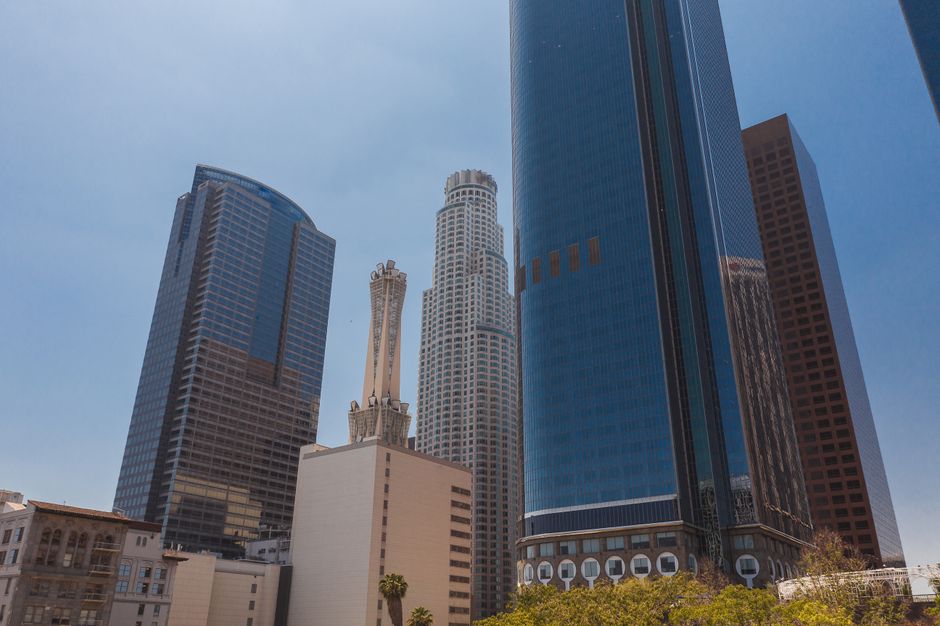
Downtown Los Angeles' gleaming financial district is confronting a reality that spreadsheets can't hide: 2026 is proving to be a brutal year for the city's investment and finance sectors. Rising operational costs, an exodus of talent to competing hubs, and mounting regulatory pressures are forcing difficult conversations in corner offices from Bunker Hill to Century City.
The math is unforgiving. Office space in the Financial District that commanded $45 per square foot just three years ago now languishes at $28, according to recent commercial real estate data. Yet for companies that have locked in leases—particularly along Hope Street and in the Crypto Row corridor near Flower Street—renegotiating existing contracts remains nearly impossible. Simultaneously, the cost of retaining talent has skyrocketed. Mid-level financial analysts in Los Angeles now command $90,000 to $120,000 annually, a 35% jump since 2023, as competing offers stream in from Austin, Miami, and increasingly, from remote-first operations.
"We're watching people pack up and leave," says one veteran portfolio manager who requested anonymity. The brain drain is real: CalTech alumni and UCLA Anderson MBA graduates are increasingly choosing Miami's tax advantages or Austin's lower operational costs. The Los Angeles Economic and Development Corporation reports that venture capital funding to local fintech firms dropped 42% in the first half of 2026 compared to the same period last year.
Fintech companies clustered around Santa Monica and Playa Vista face their own crucible. Rising energy costs—LA's electricity rates have climbed 18% year-over-year—are squeezing margins at server-heavy operations. Meanwhile, regulatory uncertainty at both state and federal levels has created a chilling effect. California's proposed financial oversight amendments have left many startup CFOs paralyzed, unable to plan expansion with confidence.
The ripple effects extend beyond offices. Restaurants and service providers that thrived on finance-sector expense accounts are feeling the pinch as deal flow slows. Lunch spots near the Wells Fargo Center on Flower Street report 30% traffic declines.
Yet some contrarian voices see opportunity. Boutique advisory firms are differentiating themselves through specialized expertise, and several investment groups are doubling down on Los Angeles-based real estate opportunities—betting that depressed commercial valuations present generational buying moments. The question facing LA's finance sector isn't whether headwinds exist; it's whether the city's historical resilience can weather them before the competitive advantages that built this financial center erode entirely.
This article was compiled by AI from the sources linked above and screened before publishing. See our editorial standards.