Why LA's Startup Funding Slowdown Matters: What the Numbers Really Tell Us
Q2 investment patterns across Santa Monica and Downtown reveal how macro headwinds are reshaping where venture capital flows.
Q2 investment patterns across Santa Monica and Downtown reveal how macro headwinds are reshaping where venture capital flows.
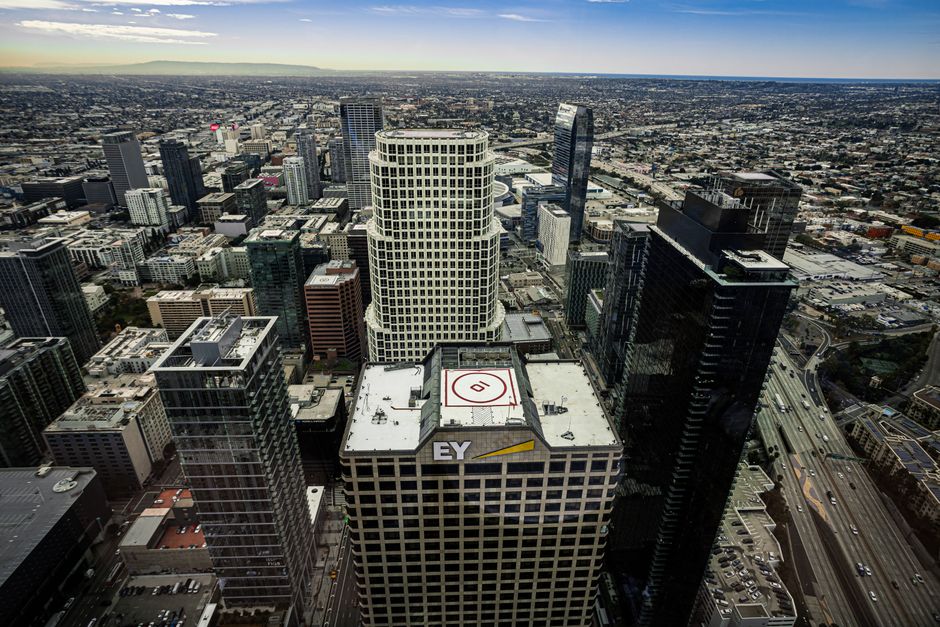
Los Angeles startup funding hit $2.1 billion in the first half of 2026, a 23% decline from the same period last year—a shift that tells us far more about the region's innovation economy than headlines alone suggest.
The cooling reflects not a loss of confidence in LA's entrepreneurial ecosystem, but rather a recalibration of where money moves. Series A rounds, traditionally the lifeblood of Santa Monica's tech corridor, have grown more selective. Median deal sizes have compressed from $8 million to $6.2 million, according to venture tracking firms monitoring West LA activity. What's notable is where capital is concentrating instead.
Early-stage funding in Downtown LA's Arts District and adjacent innovation zones has remained relatively resilient, with micro-VC firms—those deploying $500,000 to $3 million per investment—maintaining activity levels near historical averages. This divergence suggests investor appetite for the emerging narrative around adaptive reuse buildings and younger founder demographics clustering near the 7th Street corridor.
Real estate costs provide crucial context. Average office lease rates in Santa Monica have stabilized at $4.50 per square foot monthly, down from $5.20 a year ago, reflecting a broader shift toward distributed teams and reduced footprints. Conversely, Class B spaces in Downtown LA near the Broad and in converted warehouse districts command $2.80 to $3.20 per square foot—a 40% discount that's begun reshaping where founders plant flags.
Healthcare and climate tech remain exceptions to the broader funding slowdown. Life sciences companies anchored around USC's innovation district have attracted $340 million this year, buoyed partly by state-level incentives and proximity to medical institutions. Similarly, clean energy startups operating from incubators along Sunset Boulevard and in Culver City continue attracting capital, though at a measured pace reflecting longer investment cycles.
Credit markets matter here too. The Federal Reserve's June comments on potential rate stability have softened the urgency many founders felt in early 2025. Merger and acquisition activity, a secondary indicator, has picked up modestly, with eight LA-based tech exits recorded in Q2 alone—suggesting more established companies are consolidating rather than raising fresh growth capital.
For founders reading these signals: the ecosystem hasn't contracted so much as it's compressed. Operational discipline now rivals product innovation in capturing attention from venture partners evaluating Downtown's emerging corridors or Santa Monica's established power centers. Capital remains available for companies demonstrating clear paths to profitability—a return to fundamentals that will likely define LA's innovation landscape through 2027.
This article was compiled by AI from the sources linked above and screened before publishing. See our editorial standards.
How does this story make you feel?
Spread the word
About this article
Published by The Daily Los Angeles
Daily brief
Free, in your inbox before 7am. Weekdays.
More in Business


